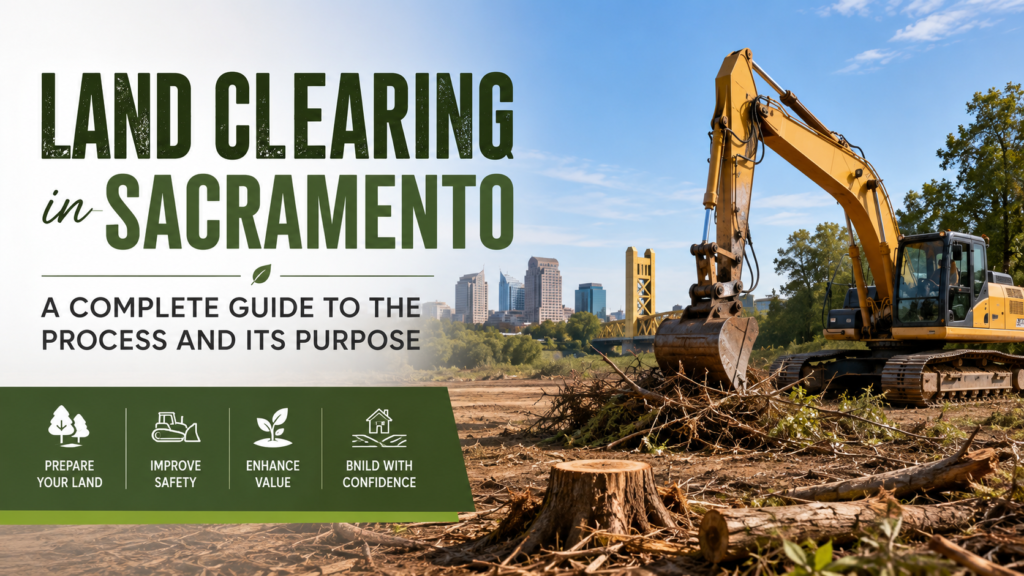
Land clearing is one of the most fundamental stages of site development the essential first step before any building, grading, or construction can begin. In Sacramento and the surrounding Northern California region, land clearing takes on added significance given the area’s diverse terrain, fire risk considerations, and active development market. This guide explains what Land Clearing Sacramento involves, the methods used, and why professional clearing is the smart choice for residential, commercial, and agricultural landowners alike.
What Is Land Clearing?
Land clearing is the systematic removal of trees, stumps, brush, vegetation, rocks, and other surface obstructions from a parcel of land to prepare it for a new use. That use might be residential construction, commercial development, agricultural cultivation, fire risk mitigation, or simple property improvement. The scope of clearing ranges from removing a handful of trees from a suburban lot to stripping and grading hundreds of acres for a large subdivision or commercial park.
In the Sacramento area, land clearing requests come from a wide variety of property owners. Homeowners preparing for additions, pool installations, new landscaping, or backyard expansion often need selective clearing of overgrown vegetation or unwanted trees. Developers preparing raw land for residential subdivisions or commercial buildings need comprehensive clearing that creates a completely clean and gradable site. Agricultural operations in the Sacramento Valley require clearing of hedgerows, unwanted brush, and old orchards to open land for new crops.
Why Land Clearing Matters in Sacramento
Sacramento and its surrounding counties face specific conditions that make land clearing particularly relevant. Fire risk is a major driver of clearing activity in the region. Cal Fire’s defensible space requirements under California Public Resources Code Section 4291 mandate that property owners within designated State Responsibility Areas maintain 100 feet of vegetation management around structures. This regulation actively drives demand for professional clearing throughout the foothill communities east and north of Sacramento.
Development pressure is another major factor. The Sacramento metropolitan area has experienced sustained population growth, with residential and commercial development expanding into previously undeveloped parcels in communities like Elk Grove, Rancho Cordova, Citrus Heights, and the unincorporated foothill areas of El Dorado and Placer Counties. Each of these development projects begins with land clearing.
Property value and usability improvement are also common motivators. An overgrown, brush-covered parcel is both difficult to use and potentially less attractive to buyers or tenants. Professional clearing transforms such properties into clean, functional spaces with improved drainage, better visibility, and significantly higher usability.
Land Clearing Methods Used in Sacramento
Mechanical clearing with heavy equipment is the most common approach for most Sacramento residential and commercial projects. Excavators, bulldozers, and skid steers equipped with specialized attachments shear blades, mulching heads, or standard buckets can clear large areas quickly and efficiently. This method works well for mixed vegetation and is the standard approach when a site needs to be completely cleared and graded for construction.
Forestry mulching, also called mastication, uses a dedicated mulching attachment mounted on an excavator or forestry machine to grind trees, brush, and stumps into a layer of fine wood chips in a single pass. The resulting mulch can be left on the soil surface, where it acts as a natural erosion barrier, suppresses regrowth, and improves moisture retention. Mulching is particularly well-suited to clearing overgrown lots where soil health is a priority, or in areas where erosion control after clearing is a concern.
Cut and haul is the traditional approach: trees are felled, processed into logs or chips, and all debris is removed from the property. This method leaves the site completely clear of material and is often preferred when the property will be graded immediately after clearing. The downside compared to mulching is the additional hauling cost and the absence of any soil-protective material left on the surface.
What the Land Clearing Process Looks Like Step by Step
A professional land clearing project in Sacramento typically begins with a site assessment. The contractor walks the property to evaluate the density and type of vegetation, identify protected or heritage trees that may require permits before removal, locate any underground utilities that could be at risk, and assess drainage patterns that could affect how clearing is performed and what erosion control measures are needed afterward.
Following assessment, a clearing plan is developed. This outlines which vegetation is to be removed, which is to be preserved, what methods will be used, and how debris will be managed whether through on-site chipping, hauling to a composting facility, or another means. If Sacramento County or local municipality requires permits for tree removal which may apply to trees above a certain trunk diameter the contractor manages that process.
The clearing operation itself follows a logical sequence. Larger trees are typically felled and processed first, followed by smaller trees and shrubs, and finally stumps, root systems, and surface debris. Ground crews may work alongside heavy equipment to manage debris flow and ensure complete coverage of the clearing area.
After vegetation removal, most clearing projects conclude with stump grubbing or grinding, debris removal or chipping, and initial site grading to create a stable, level surface. Erosion control measures such as silt fencing, straw wattles, or hydroseed may be installed to protect the cleared soil until construction or landscaping begins.
Environmental Considerations for Sacramento Land Clearing
Responsible land clearing in Sacramento requires attention to several environmental factors. Protected trees including heritage oaks designated under local ordinances require assessment and permits before removal. Sacramento County and the city both have tree preservation policies that regulate the removal of certain species and sizes of trees.
Proximity to waterways and drainage features introduces additional complexity. California Environmental Quality Act (CEQA) review may be required for clearing projects exceeding a certain acreage, particularly those near sensitive habitats, vernal pools, or regulated watercourses. Contractors familiar with the Sacramento region understand how to identify these triggers and navigate the required review processes.
Erosion control after clearing is not optional it is a legal requirement in most Sacramento jurisdictions. Exposed, cleared soil is highly vulnerable to erosion during Sacramento’s rainy season, and contractors are responsible for implementing appropriate erosion prevention measures as part of the clearing scope.
Common Questions About Land Clearing in Sacramento
Do I need a permit to clear land in Sacramento? Permit requirements vary depending on project size, tree types involved, and proximity to sensitive areas. Removing trees above a certain size may require a tree removal permit. Grading that results from clearing may require a separate grading permit. Your clearing contractor should be able to advise on specific permit requirements for your parcel.
How long does land clearing take? A small residential lot with moderate vegetation might be cleared in a single day. Larger parcels with dense vegetation, significant tree coverage, or stump removal requirements could take several days to a week or more. Factors like equipment type, crew size, and debris management approach all influence the timeline.
What happens to the debris after clearing? Most Sacramento contractors offer multiple debris management options. Material can be mulched on site, chipped and hauled to a composting facility, or in some jurisdictions burned under appropriate burn permits. Discussing debris management preferences with your contractor in advance ensures the finished result meets your expectations.