Queue Management System in Pakistan: The 2026 Guide to Faster, Fairer Service
Crowded counters and unclear lines drain both patience and profit. A modern queue management system in Pakistan replaces the chaos with order, giving customers a fair wait and giving managers hard data to work with. In 2026, this technology is no longer a luxury, it is a competitive necessity.
This guide walks through how queue systems function, why they matter for banks, hospitals, telecom outlets, and government offices, and how pairing them with reliable barcode scanners speeds up every transaction. If you serve walk-in customers, this is for you.
Why a Queue Management System in Pakistan Pays Off
Pakistan’s service sector is growing fast, and customer expectations are rising with it. People increasingly compare their bank, clinic, or store to the smoothest experience they have ever had, not just to local rivals. A disorganized line sends the wrong message.
A well-designed queue system fixes both the reality and the perception of waiting. It organizes traffic, keeps customers informed, and captures the data managers need to staff smartly and improve continuously.
The core benefits include:
- Shorter, fairer waits with clear ticketing
- Less crowding and confusion in the lobby
- Real-time insight into staff and counter performance
- Better staffing decisions based on peak-hour data
- A more professional, trustworthy brand image
How Does a Queue Management System Work?
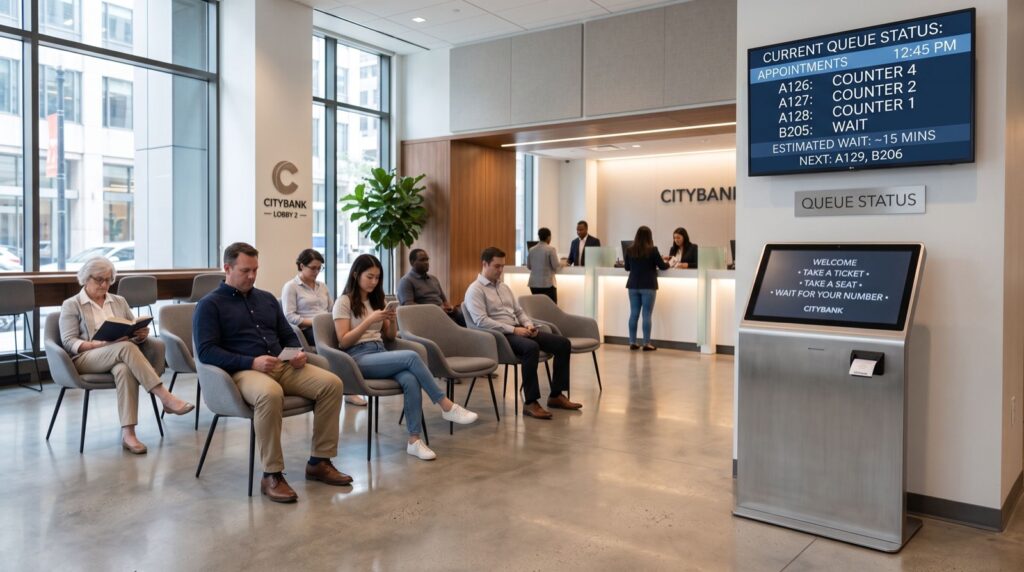
The technology is simpler than it looks. A customer checks in, receives a ticket, waits comfortably, and gets called to the right counter. Behind the scenes, software records every step for analysis.
The Main Components
A complete system usually combines several elements that guide the customer and feed data back to management.
- Check-in kiosk: where customers select a service and take a ticket.
- Queue software: routes each visitor to the correct counter or department.
- Display screens: announce ticket numbers and counter assignments.
- Counter terminal: lets staff call the next customer.
- Analytics dashboard: reports wait times, service times, and traffic patterns.
Specialists like the queue management system in pakistan team tailor these components to your branch layout and service mix, whether you run one office or a national network.
Why Fast Scanning Completes the Picture
Organizing the wait is only half the job. If the transaction itself is slow, the whole experience still feels sluggish. That is why leading businesses pair queue systems with fast, reliable barcode scanners at the counter.
The Role of a Reliable Handheld Scanner
A dependable scanner speeds up billing, check-in, and document handling. It reads printed labels, damaged codes, and even barcodes displayed on a customer’s phone.
- Fast reads: quick, first-pass scanning of 1D and 2D codes.
- Mobile support: reads barcodes and QR codes off phone screens.
- Durability: built to survive drops and constant daily use.
- Comfort: ergonomic design for high-volume counters.
- Easy integration: connects smoothly with common POS and CRM systems.
A strong choice for busy counters is the Honeywell Voyager XP 1470g, a durable handheld scanner known for reliable reads even on poorly printed or damaged barcodes. It keeps transactions moving so the queue behind it never stalls.
Comparing Queue and Scanning Setups
Different environments need different combinations. The table below helps you match the right setup to your business type.
| Business Type | Recommended Queue Setup | Scanner Priority | Key Benefit |
|---|---|---|---|
| Bank branch | Multi-service kiosk | Document and code reading | Faster, fairer service |
| Hospital | Appointment + walk-in hybrid | Patient ID scanning | Reduced crowding |
| Retail store | Simple ticketing | Fast product scanning | Quicker checkout |
| Government office | Multi-service kiosk | Document verification | Transparent ordering |
Measuring Results and Return on Investment
Technology is worth it only if you can prove the payback. Queue systems generate exactly the metrics you need to justify the spend and keep improving over time.
Track these indicators after go-live:
- Average and maximum wait time per service
- Average service time per agent
- Customer abandonment rate before service
- Peak-hour traffic distribution
- Scanner error and retry rates at the counter
To install and support the full stack correctly, work with trusted professionals who understand both the queue software and the scanning hardware side of the deployment.
For broader context on how digital service and connectivity are advancing across developing markets, the International Telecommunication Union publishes global data on technology adoption that shapes customer expectations everywhere.
Is a Queue System Worth It for a Small Business?
Many small business owners assume queue technology is only for large banks. That is no longer true. Entry-level systems are affordable, quick to install, and scale as you grow. Even a single kiosk can transform a cramped, chaotic waiting area into a calm, orderly space.
The return often shows up fast: fewer abandoned customers, faster service, and a more professional image that builds loyalty. Starting small and expanding later is a smart, low-risk path.
Frequently Asked Questions
How much does a queue management system in Pakistan cost?
Cost depends on the number of counters, branches, and features you need. A basic single-counter setup is budget-friendly, while multi-branch systems with analytics cost more. Most vendors offer scalable packages so you can start small and grow.
Can customers reserve a spot from their phone?
Yes. Many 2026 systems support virtual queuing through SMS or an app, letting customers hold a place and wait wherever they like. They get a notification as their turn approaches, which reduces lobby crowding.
Will a Honeywell Voyager XP 1470g work with my system?
In most cases, yes. This handheld scanner connects through standard USB or keyboard-wedge interfaces and works with common POS and management software. A local integrator can confirm compatibility and handle setup.
How quickly can a system be installed?
A single branch can often go live within a few days once hardware arrives and staff are trained. Larger networks take longer, but a good vendor phases the rollout to keep disruption to a minimum.
Conclusion: Serve Smarter, Wait Less
In 2026, customers judge businesses by how quickly and fairly they are served. A well-chosen queue management system in Pakistan, paired with a reliable barcode scanner, delivers exactly that: shorter waits, faster transactions, and richer data for smarter management.
Ready to modernize your customer flow? Reach out to an experienced provider, request a demo, and see how the right queue and scanning technology can transform your service this year.